Related reading: Timeless Versus Trend-Driven Interiors in Dallas Homes
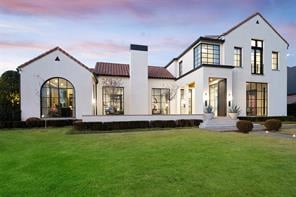
Related reading: How to Look Past Finishes When Buying a HomeAsk most buyers what makes a luxury home feel "well designed," and the answer usually comes out as a feeling rather than a specific list — the sense that a home simply works, that nothing feels forced or out of place. That feeling is rarely accidental. It tends to come from a handful of specific factors that separate homes that feel genuinely well designed from homes that are simply expensive.
Proportion is one of the most consistent factors, and one of the easiest to overlook. Rooms that feel comfortable rather than cavernous or cramped, ceiling heights that suit the scale of a room, and windows sized appropriately to the walls they're set into all contribute to a sense of ease that's hard to articulate but easy to feel. Homes that get proportion wrong — oversized rooms with sparse furniture, or windows too small for a room's scale — can feel "off" even to buyers who couldn't explain exactly why.
Material quality plays a similarly outsized role. The difference between a well-selected natural stone and an imitation surface, or between solid wood cabinetry and a lower-grade alternative, is often felt more than consciously noticed — but it does register, particularly to buyers who have toured multiple homes in the same price range and developed an instinct for what quality feels like underfoot and underhand.
Flow — how a home moves from one space to the next — matters as much as any individual room. A well-designed home tends to guide movement naturally: an entry that sets the tone without being oversized, a transition from public to private spaces that makes sense, sightlines that reveal a home's best features at the right moments rather than all at once. Homes that feel disjointed, no matter how nice each individual room is, rarely feel "well designed" as a whole.
Light is another factor buyers respond to instinctively. Homes designed with attention to how natural light moves through the space over the course of a day — rather than relying entirely on artificial lighting to compensate — tend to feel warmer and more livable, and that quality is difficult to fake in photography or during a single showing.
Finally, restraint tends to separate genuinely well-designed homes from merely expensive ones. The most impressive homes are rarely the ones with the most features or the boldest design statements — they're the ones where every choice feels intentional and nothing feels like it's competing for attention. That kind of restraint takes more discipline to achieve than an abundance of high-end finishes, which is part of why it stands out so clearly to buyers who've seen enough homes to recognize the difference.